

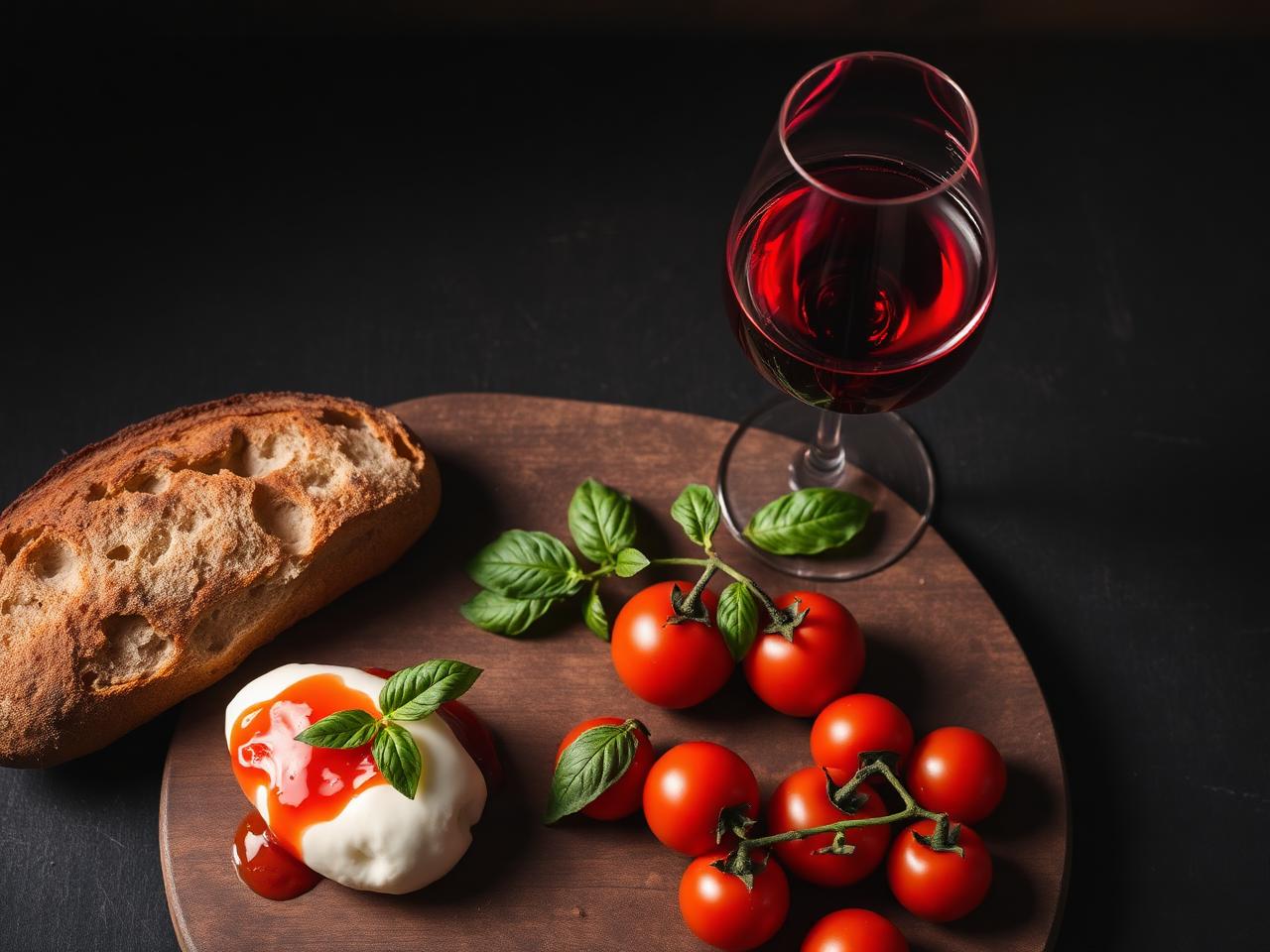
What Falerno is
The oldest Italian wine still in production
Falerno del Massico DOC is a denominazione di origine controllata established in 1989, covering wines made in the towns of Mondragone, Falciano del Massico, Carinola, Cellole and Sessa Aurunca, in the province of Caserta. It is the direct descendant of the legendary Falernum, regarded by Latin authors as the finest wine of the Roman Empire.
Drinking a glass of Falerno today in Casale di Carinola means tasting two thousand years of history: the same grape, the same volcanic soil, the same hill country that Martial, Pliny the Elder, Horace and Virgil sang of in their verse.
History
From the Rome of Augustus to the 1989 DOC
In Pliny the Elder's taxonomy, Falernum was classified among the vina prima notae, the highest grade. In his Epigrams, Martial calls it "immortale Falernum": a wine able to age for over a hundred years, kept in amphorae sealed with pitch and gypsum, and traded at very high prices in the markets of Rome.
Ancient voices
Martial and Pliny on Falernian
«Addere quid cessas, puer, inmortale Falernum?
Quadrantem duplica de seniore cado.»Why do you hesitate, boy, to add the immortal Falernian? Double the measure, from the older jar.
«Falernus ager a ponte Campano… nec ulli nunc vino maior auctoritas. solo vinorum flamma accenditur.»The Falernian district begins at the bridge of Campania… No wine now has greater authority. It is the only wine that catches fire with a flame.
After the fall of the Empire, viticulture in the Ager Falernus never stopped. The farming families of Carinola handed down vineyards and techniques right up to the granting of the Denominazione di Origine Controllata, awarded on 3 July 1989 by ministerial decree.
Grape varieties
Aglianico, Piedirosso, Falanghina and Primitivo
Falerno Rosso
Aglianico (min. 60%) + Piedirosso (max 40%)
Structured, tannic wine that ages well. Notes of ripe plum, tobacco and leather.
Falerno Primitivo
100% Primitivo
Warm and intense, with hints of preserved sour cherry and dark chocolate. Excellent when aged.
Falerno Bianco
100% Falanghina
Fresh, savoury, mineral. Aromas of citrus and wildflowers. Perfect with fish and frittatas.
Falerno Riserva
Red, aged at least 24 months
Wood and bottle aging. Refined and elegant, ideal with game and blue cheeses.
Terroir
The volcanic soil of the Roccamonfina
The Roccamonfina volcano stopped erupting about 50,000 years ago, but its legacy lives on in the soils of Casale di Carinola: tephrites, compacted ashes and grey tuffs rich in potassium, phosphorus, magnesium and a rare concentration of trace elements.
It is this mineral cocktail that gives Falerno wines their unmistakable signature: marked savouriness, length on the palate, a "saline" minerality reminiscent of cold ash that sets them apart from any other Campanian wine.
The south-westerly hillside exposure, the sea breeze from the Gulf of Gaeta less than 10 km away, and the wide day-to-night temperature swing complete the picture: ideal conditions for slow-ripening grapes with high sugar concentration.
Where to taste it
In Casale di Carinola, heart of the Ager Falernus
Casale di Carinola is one of the historic gateways to the Ager Falernus, the winegrowing district described by Latin authors. Several village wineries open to the public for visits and guided tastings, often paired with traditional dishes such as the 101-egg frittata and Matese cheeses.
Summer 2026
Casale in Birra · 31 Jul – 1 Aug
Stands run by local Falerno producers in Piazza Struffi during the village beer festival.
See Casale in Birra 2026
All year round
Food and wine events
Festivals, tastings and gatherings of the village associations connected to the wine and flavours of the Roccamonfina.
See the calendar
Frequently asked questions
FAQ · Falerno del Massico
- What is Falerno del Massico DOC?
- Falerno del Massico is a denominazione di origine controllata established in 1989 in the area of the Massico and Roccamonfina mountains, in the province of Caserta. It covers reds based on Aglianico and Piedirosso and a white made from Falanghina, and is considered the direct heir of the Falernum praised by Latin authors.
- Which grapes are used for Falerno?
- Falerno Rosso is made from Aglianico (minimum 60%) and Piedirosso (maximum 40%). Falerno Primitivo comes from the native Primitivo grape. Falerno Bianco is 100% Falanghina, an ancient Campanian variety.
- Why is it called 'the wine of the emperors'?
- Martial, Pliny the Elder, Horace and Virgil cite it as the finest wine of the Roman Empire. It was served in the gold cups of patricians and fetched very high prices in the markets of Rome. Its fame was such that the term Falernum became a byword for luxury and refinement.
- What makes the Casale di Carinola terroir special?
- The Casale vineyards sit on tephritic volcanic soils, rich in potassium, phosphorus and rare minerals released by the Roccamonfina complex (a volcano dormant for about 50,000 years). This gives the wines exceptional structure, mineral savoury character and longevity.
- Where can I taste Falerno in Casale di Carinola?
- Several village wineries open to the public for visits and tastings. During the Casale in Birra festival (late July – early August), local Falerno del Massico producers run stands in Piazza Struffi.
- What dishes pair with Falerno Rosso?
- Falerno Rosso pairs well with red meat, roast lamb, aged cheeses (Matese pecorino), cinta senese cured meats, and traditional Easter dishes from the village such as the 101-egg frittata.